

New Castle County Library
| Location | Dover, DE |
|---|---|
| Project Owner | New Castle County |
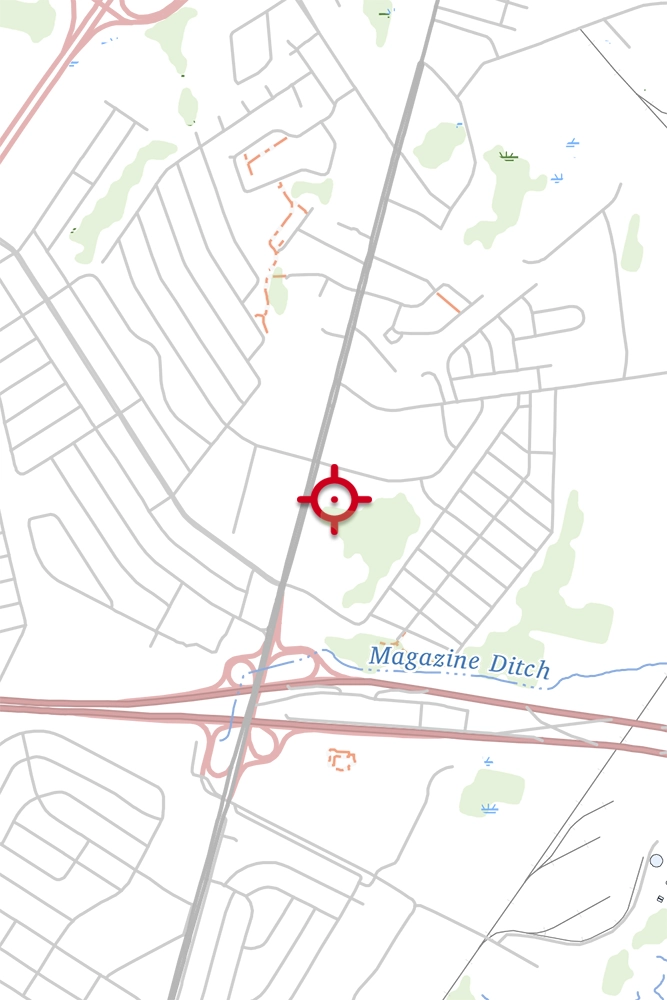
Ten Bears assisted New Castle County with pre-purchase due-diligence of a 13-acre property in New Castle, Delaware under consideration for purchase and redevelopment as a public Library and Technology Center. Ten Bear’s AAI-compliant Phase I Environmental Site Assessment (per ASTM E:1527-13) for the County identified recognized environmental conditions (RECs) stemming from historical automotive repair operations, as well as extensive areas covered with up to 10 feet of historical fill. Through prior Phase I and II ESA’s for prior owners of two of the parcels comprising the site, Ten Bears had previously identified hazardous substances in soil samples at concentrations above DNREC’s soil Screening Levels. Ten Bears prior knowledge of site conditions led to a quick decision to further assess potential environmental impacts related to historical site uses and uncharacterized fill placement through a Brownfields Investigation (BFI) under DNREC’s Brownfields Program. The BFI goal was to determine the environmental character of the site, including potential impacts to groundwater, as well as the direct nature of the placed fill materials. The BFI field program of soil borings, monitoring wells, a Geophysical Survey, and backhoe-excavated test pits delineated areas of subsurface obstructions that might interfere with construction, as well as environmental impacts requiring remediation. Ten Bears applied EPA and DNREC Risk Assessment methodology to calculate human health risks under a variety of hypothetical future uses. Risks to commercial workers (employees) and future construction workers were acceptable; possible contact risks to patrons spending less time on site than employees were also acceptable.
Because the future Library might be routinely used by children (e.g. for after school programs) possibly with outdoor play, DNREC required site-specific evaluation of future recreational use scenario. Acceptable soil contact risks were calculated for future adult, but not residential use, while the child-recreation use was marginally acceptable. To mitigate potentially unacceptable future residential or child-recreator soil and groundwater risks, TBE recommended an Environmental Covenant remedy prohibiting future residential land use and groundwater use at the Site. In an abundance of caution and to provide additional protectiveness for future children who may use designated unpaved outdoor play areas, DNREC required that any playground be capped with a 2-foot thick clean cover material to minimize future direct soil contact exposures. Because the debris and historical fill materials required proper handling/ management during construction, TBE developed a DNREC-approved Contaminated Material Management Plan to guide future soil-disturbing construction activities.
Redevelopment site plans developed concurrently with the BFI ultimately placed the future 43,000 square-foot Library building within the miscellaneous fill materials, which were not geotechnically suitable to support the building or paved parking areas. As a cost-control measure, TBE recommended and facilitated on-site and off-site reuse to avoid expensive transportation and disposal.